Ham Radio Conditions/MUF

We are starting our Rocky Mountain Survival Search and Rescue (RMSSAR) net. We are hoping that you will join us internationally on HF, and locally on 2 Meters. Please contact me, W7WWD, at rmssar@gmail.com for information on times and frequencies.
Showing posts with label health care. Show all posts

Sunday, May 5, 2013

7 Kitchen Essentials That Deserve To Be On Your Preparedness Shelves

7 Kitchen Essentials That Deserve To Be On Your Preparedness Shelves

Our preps are our life line. The items we choose should be able to carry us, not only through difficult times, but perhaps through impossible times as well.

There is a reason why our ancestors relied so heavily upon essential kitchen items for their day-to-day survival, and it wasn’t because they wanted to make the best baked goods in the county. The “make due or do without” philosophy transferred into their food sources as well. The answer as to why our ancestors stocked these items is versatility.

The following are a list of essential items that are very deserving of a space on your emergency food shelves:


1. Baking Soda - This is my favorite item to stock up on because it has so many darn uses!
  • Because the active ingredient (sodium bicarbonate) is an alkaline, it is a natural antacid.
  • Dental care
  • Electrolyte powder
  • Emergency antiseptic
  • Natural cleaner
  • Cleans off rust
  • Can be used in treating scalding, to prevent blistering and scarring. Cover the scalded area with a liberal layer of sodium bicarbonate and water paste and seek medical assistance.
  • Can be applied to skin irritations that occur from poison oak, poison ivy and sumac.
Please note: Due to the salt content, anyone on a sodium-restricted diet or those with high blood pressure, cardiovascular disease or kidney disease should not take sodium bicarbonate in large quantities as it can elevate blood pressure, aggravate heart disease and lead to edema, or swelling of the legs and feet due to fluid retention.


2. Baking Powder - Baking soda is actually the primary component in baking powder, so it’s no surprise that pretty much anything you can do with baking soda, you can do with baking powder. Some additional uses include, but are not limited to:
  • Eliminates odors
  • Natural cleaning agent
  • Draws out insect stings and jelly fish venom.
  • Keeps ants away from the house.
3. Salt - Salt is another of my favorite kitchen essentials to stock up on. It is a multipurpose, low cost prep that will be highly desirable if a long term disaster were to come around. Salt will be a big bartering item! Stock up on different types of salt: sea salt, table salt, pickling salt, curing salt – they will all have their uses in a long term disaster. Sea salt is not only healthy for your body, but it also provides antiseptic and bactericidal qualities. Read more here. 4. Yeast
Where would we be without the discovery of yeast? Yeasts are naturally present and live symbiotically on food sources such as grains, vegetables and fruits. Click here to learn 3 ways to grow your own baking yeast.

Baking Yeast Brewers Yeast
  • Making alcohol
  • Nutritional supplement
  • Assists diabetics in controlling their blood sugar level.
  • Helps control high cholesterol levels.
  • Is a natural flea control for pets.
5. Vinegar

Vinegar has been around for thousands of years and is so diverse that it would be worthwhile to have a good supply stocked up. The good news is the shelf life is long-term! To learn how to make your own apple cider vinegar, click here. 6. Corn Starch

Did you know that corn starch offers some health benefits? Crazy, I know. Corn starch has 488 calories per cup and 117 grams of carbohydrates. I realize this is not an ideal main entree, but if added to dishes it could be a great way of providing additional calories and carbohydrates for added energy. There are also some additional uses to consider with this product:
  • Great for use as a dry shampoo
  • Burn treatment
  • Treatment for insect bites
  • Deodorant
  • Gets grease out of fabric
  • Cleans windows
  • Thickener for soups, sauces and gravies
7. Powdered Milk

Have you ever wondered how powdered milk is made? Basically, it is made by evaporating milk to dryness. One of the reasons that powdered milk is so popular amongst the preppers and survivalists is it can be stored for long term use. Further, due to it’s low moisture level, it does not need to be refrigerated, thus making it a perfect emergency pantry item!
  • Milk
  • Cheese
  • Sour cream
  • Whipped topping
  • Substitute for milk
  • Facial wash
http://readynutrition.com/resources/...lves_15032012/

Thursday, March 21, 2013

Old Post Reminder of Mask Requirements for Pandemic

27 Apr 2009 /
http://www.utahpreppers.com/2009/04/...aredness-info/ Family Preparedness, Pandemic Preparedness, Personal Preparedness
Since my post from yesterday regarding Pandemic Preparedness in light of the current Swine Flu outbreak, I’ve talked to several other preppers and want to provide our readers with more information. Specifically I want to share some other/better mask information, some great links for info on the virus spreading and to discuss sheltering in/quarantine a bit more.
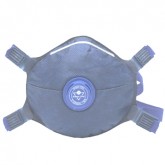
First, to masks. I previously recommended that everyone have several N95 masks in their preps. Having talked with several prepping experts today including a couple who sell masks, I have some additional recommendations for you.
N95 Masks

First, the consensus is still that N95 masks are completely satisfactory to have in your preps. The main issues with N95 Masks are regarding donning the mask. Several points were made to me about this today. First, when you don the mask, you MUST make sure that there is a good seal of the mask to your face. This usually means adjusting the nose bridge so that it fits properly on your face. If you don’t have a good seal then the mask is useless to you. Second, make SURE that your hands are clean and sanitized before you handle the mask. If you have the virus on your hands and then touch the inside of your mask to put it on, you’re just putting the virus right in your airway. Finally, and this is something we learned some time ago, for children - you can cut the bottom of the adult N95 mask off to custom fit it to your child’s face. This is actually what my wife and I were taught to do by the Oncologists for our daughter with Leukemia. You can order N95 masks from this link (or lots of other places as well).
N99 Masks

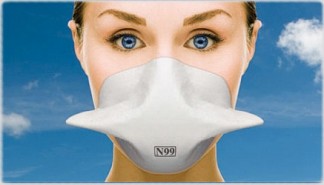
N99 masks are more expensive than N95 masks. They do a slightly better job of killing viruses and (from what I’ve learned today) they tend to adjust and fit better on your face. The picture above is of someone wearing an N99 mask. You can order N99 masks from this link (or lots of other places as well).
Triosyn T-5000-V Respirator Mask

The Triosyn mask is a much more expensive solution but is a proactive approach. They have an antimicrobial protection system built into them, are fluid resistant, have an activated carbon layer to filter out odors and a one way valve ventilation system. The ventilation system makes it easier to wear for extended periods of time because it is much easier to exhale from. It also has an inner seal along with two adjustable head straps and an adjustable nose piece. It has about a 5 year shelf life and is good for 24 hours of use. It is one of the only masks that actually kills viruses instead of just filtering them out. You can order them through this link (or lots of other palces as well).
Panic Buying

The panic buying has already started. Here in Utah, many stores are already out of them. I went by a couple stores today and they were sold out, while I was at Wal-Mart looking 3 other people came to where I was looking for masks. Many online vendors (including the ones I’ve talked to today) are reporting that they have had a HUGE demand the last couple days and are sold out.
They also said that they fully expect to be re-stocked within the next 48 hours. Masks are the new ammunition - they’re going to be pretty tough to find before too long! With all the links above, I would do what I could to find out from a site whether they had masks in stock before I placed an order with them.
Masks in General

Let’s put all this in perspective. What do you need masks for anyway? There a only a couple COMMON times you’ll need them during a Pandemic:
  • In Public
    • Anytime you are out in public during an actual pandemic/epidemic (which point we are NOT to yet!) you will want to be wearing a mask, eye protection and possibly gloves. You’ll also want to be armed with sanitizing spray and wash.
  • Initial Quarantine
    • If you start an in home quarantine then you will want everyone to wear masks and take serious protective precautions for the first 48 hours. This is to identify whether anyone in the quarantine is already infected and is going to come down sick. Once you’ve determined that nobody in the quarantine is a carrier you should be safe to un-mask but should still maintain very sanitary practices.
  • Around someone sick
    • If you have to work around someone who is sick (i.e. a member of your quarintine contracts the virus - like your child) you will want to take multiple precautions. Isolate the person in a seperate room, hang heavy plastic over the doorway to prevent active airflow, don protective gear including mask, goggle, gloves, apron, shoe covers anytime you must enter the room.
Again, these are the most common times you’ll need a mask. If you live in an area that has had a breakout, I would wear a mask anytime I was out in public. If you initiate a quarantine, once you’ve gone through the first 48 hours you should be fine in your home without a mask and even outside - as long as you are not near other people. My perspective is kind of skewed since I live in the country - there are very few people here. If I quarantine I fully expect I’ll be out working on my garden most of the time.

Generally speaking, little kids DO NOT like to wear masks! (we have some personal experience with this) I would advise you to tell your kids that you’re going to teach them about some current events and some plans in case certain things happen. Have them wear a mask while you’re talking, make it last about an hour. Have a fantastic dessert for them if they keep their mask on. Then do it for half an hour each day for the next five days. By this point they won’t freak out about the mask, they won’t fight it quite as much.
Sanitizing

Anytime you’ve handled something that might have exposed your hands to the virus, you should vigorously scrub your hands - preferably with anti-bacterial soap. You should be using an alcohol based sanitizer pretty much anytime you handle something that might have been exposed - door handles, paper, hand rails - anything someone might have sneezed on or touched after sneezing. Again, this is only if you are in an at-risk situation like a breakout in your state.

Other ways you can sanitize are to get spritzer spray bottles and fill one with isopropyll alcohol and another with bleach. Spraying things like door handles with either or both of these will kill most germs.
Utah status

Since we’re a Utah blog we’ll discuss the status of the outbreak in Utah. As of now, Utah has not had any reported cases of the Swine Flu. The state CDC directors and other government officials have met to review Utah’s action plan should cases be found here. They stress that currently Utah is in an “emergency PREPAREDNESS” stage, not an actual Emergency stage. As of now, no schools have been closed or are planning to close. They do advise the following though:
They’re asking people with respiratory symptoms to stay at home but to go to a doctor if they have the serious hallmarks of flu — like a fever, muscle aches, exhaustion, chills, sweats and headaches –not just a cold.

“Well, I think you have to use common sense. You know we’re subject to colds, to respiratory illnesses all the time. I think though, if I were running a fever, had muscle aches and felt unusually tired along with a respiratory illness, yeah, I’d go to the doctor,” Dr. Sundwall said.
World Status

As of right now in the U.S. NOBODY has died from the virus. Many have come down with it but they’re being reported as “mild cases”. However, as of right now 103 people have died in Mexico from the swine flu.
There is so much going on with this worldwide that any status would be outdated as soon as I posted it. There are a few good resources to check out though.
Don’t Panic, Just Prepare!

There seems to be a lot of fear out there about this, the news seems to be feeding that fear. The information in the last section of this post could be scary. But we need not panic! We’re Preppers, we look to things like this as stuff we thought might happen! The purpose of this post is NOT to scare you. It’s merely to help you get prepared for what might come. We’re trying to provide you with information so that you don’t have to be scared.

The prudent thing to do right now is review your preps - make sure you’re ready for an extended stay at home. If you have to self-quarantine at home, are you ready to be there for a while? What if this virus mutates and turns into a pandemic? Are you prepped for the grid to go down? Are you prepped for other services to be interrupted? Take inventory, make sure your 3 month supply is fully stocked. Make sure you have fuel, food, water and pandemic preps. Have a family action plan in case there is a breakout in your area.

Always, always remember: If you are prepared, you SHALL NOT FEAR! As Preppers we’re ready for this - whether it happens or not.

Friday, July 20, 2012

Sterile Vs. Clean In Survival Situations


Hey Prepper Nation,
A significant factor in the quality of medical care given in a survival situation is the level of cleanliness of the equipment used.  In primitive conditions, it will be a challenge to make an environment that guarantees the best chance of avoiding infection in a wound.  It will be harder still to sterilize all of your equipment. Now, you may have heard of the terms “sterile” and “clean”, but do you have more than a vague idea of what they mean?
When it comes to medical protection, “sterility” means the complete absence of microbes.  To guarantee the elimination of all organisms, a type of pressure cooker called an “autoclave” is used for instruments, towels, and other items that could come in contact with the patient.  Interestingly, some things can be “dirty” and “sterile” at the same time.  If I put a handful of dirt in a container in a pressure cooker, I would render the dirt sterile by killing all the microbes in it.  It would still be dirt, however.
There is considerable debate, even now, as to what truly constitutes “sterile technique” and what is to be considered “clean technique”.  There is even some disagreement with regard to which technique is best in which scenario.  Although this is a discussion for a much longer article, suffice it to say that initial wound care, especially with deep wounds in the first 48 hours, should be sterile if possible.  As it becomes clear that the wound is not infected, clean technique may be acceptable (indeed, it may be all you have).  An infected wound will appear red, swollen, and feel hot to the touch (see image below).

Here are common characteristics of clean vs. sterile methods:
Sterile technique involves hand washing with special solutions and the use of sterile instruments, gloves, towels, and dressings.  When used on a patient, the area immediately around them is referred to as a “sterile field”.  In order to say that sterile technique was used, you would have to assure that only sterile items were used, and were only touched by other sterile items.  This is not impossible, but requires extra diligence (and expense) to achieve.  For example:  Clean, non-sterile gloves come 100 to a carton, while each pair of sterile gloves must be individually packaged.

Clean technique concentrates on reducing the number of microorganisms that could be transferred from one person to another by medical instruments, or other medical supplies. Meticulous washing of hands and instruments with soap and hot water is important, as is the wearing of clean gloves.  Attention is given to making sure that dressings are made of clean cloth or gauze.  In most survival settings, this may be as good as it gets, but is that so bad?
There is very little research that compares clean vs. sterile technique for wound care.   In one study, an experiment was conducted in which one group of patients with traumatic wounds were cleaned with sterile saline solution, the other group with tap water.  Amazingly, the infection rate was 5.4% in the tap water group as opposed to 10.3% in the sterile saline group.  Another study revealed no difference in infection rates in wounds treated in a sterile fashion as opposed to clean technique.
Therefore, I usually recommend clean water to irrigate wounds (see image below), although sterile saline is also fine.  If you use Betadine, make sure it is very dilute.  Betadine is cytotoxic (harmful to new cells) in deep wounds, so is best in the initial cleansing or in situations where infection is suspected. The same goes for Hydrogen Peroxide.

Let’s talk for a second about sterile vs. non-sterile dressings.  I usually recommend a moist sterile gauze in deep wounds covered by a less moist or dry dressing on top (“wet-to-dry dressing”).  However, consider this: A 2006 study in the Canadian Journal of Plastic Surgery took 2 x 2 inch squares of the following items and submitted them for tests to see if there were bacterial organisms on them:
  • 20 Sterile Gauze
  • 20 Panty Liners
  • 20 Sanitary Feminine Napkins
  • 20 Diapers
The results:
  • None of the 20 sanitary napkins grew out bacteria
  • 1 of the 20 panty liners grew out bacteria (Staphylococcus)
  • 2 of the 20 sterile dressings grew out bacteria (1 Staph. And 1 Streptococcus)
  • 15 of the 20 diapers grew out bacteria (all bacillus)
Surprised that the sterile dressings came in third?  I was.  In any case, this doesn’t prove that you shouldn’t use sterile dressings where possible; it just means that, for survival purposes, we might want to conduct further research (which is what the Canadian study recommended).
                                            The Winner!
Remember that your entire sick room should be kept disinfected, so as not to spread infection. Disinfectants are substances that are applied to non-living surfaces to destroy microbes. This would include areas where you would treat patients or prepare food.  Disinfection does not necessarily kill all germs and, as such, is not as effective as sterilization.
A disinfectant is different from an antiseptic, which removes micro-organisms from the surfaces of LIVING tissue.  An antiseptic differs from an antibiotic in that an antibiotic can kill harmful bugs INSIDE a living organism.
Examples of Disinfectants include:
  • Bleach
  • Alcohol
  • Vinegar
Examples of Antiseptics include:
  • Chlorhexidine (Hibiclens)
  • Betadine
  • Hydrogen Peroxide
  • BZK (Benzalkonium Chloride)
Examples of Antibiotics include:
  • Amoxicillin
  • Tetracycline
  • Ciprofloxacin
Some mistakenly consider disinfection to be the same as “decontamination”. The latter, however, may include the elimination of toxic chemicals or radiation.  The removal of radioactive dust from a surface would, therefore, not be called disinfection, but decontamination.
Dr. Bones
Reference:  Can J Plast Surg. 2006 Spring; 14(1): 25–27.
Reference:  Journal of Wound, Ostomy, and Continence Nursing- March/April 2012
Are you prepared to deal with medical issues in disaster situations?  If you have the #1 Amazon Survival Skills Bestseller “The Doom and Bloom Survival Medicine Handbook”, you will be!   Here’s the trailer:  http://www.youtube.com/watch?v=Kb3vdQecUPM

Friday, March 30, 2012

SODIS-Safe Drinking Water For All

How does it work?

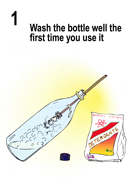
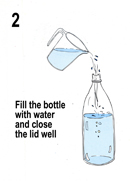
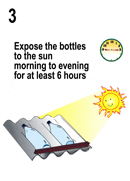
Step 1 Step 2 Step 3 Step 4
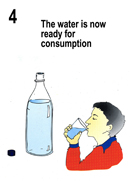
The SODIS method is very easy to apply: A transparent PET bottle is cleaned with soap. Then, the bottle is filled with water and placed in full sunlight for at least 6 hours. The water has then been disinfected and can be drunk.

Important points to consider when applying the SODIS method

Step 1
Material, colour and shape of the bottle
We recommend using PET bottles in the application of the SODIS method because they are light and do not break. They are also easy to obtain in many regions. However, glass bottles or special bags can also be used. PET bottles are usually labelled as such, but they are not called by the same name in all countries.
Factsheet Glass vs. PET (EN, FR, ES)
Factsheet Bottle vs. Bag (EN, FR, ES)
Factsheet Use of Bags (EN, FR, ES)
The bottles must be transparent and colourless. PET bottles often have a bluish tinge. This is not a problem. Heavily scratched bottles must be replaced.
Factsheet Ageing of bottles (EN, FR, ES)
The bottles must not hold more than 3 litres.
Factsheet Depth of water (EN, FR, ES)
Step 2

Turbidity

If the water is very turbid, the effectiveness of the method is reduced. It is very easy to determine whether the water is sufficiently clear:
The filled PET bottle must be placed on top of a newspaper headline. Now one must look at the bottom of the bottle from the neck at the top and through the water. If the letters of the headline are readable, the water can be used.
If the letters are not readable, the water must be filtered. This test corresponds to a turbidity of 30 NTU.
Factsheet Turbidity (EN, FR, ES)
Step 3

Cloudiness

Cloudiness affects the strength of solar radiation and thus also the effectiveness of the method.
Rule of thumb:
  • If less than half of the sky is clouded over, 6 hours will be enough to completely disinfect the water.
  • If more than half of the sky is covered with clouds, the bottle must be placed in the sun for 2 consecutive days.
Factsheet Cloudiness (EN, FR, ES)

Rain

The method does not work satisfactorily during lengthy periods of rain. On these days, we recommend collecting rainwater.
Step 4

Preventing recontamination

The treated water should be kept in the bottle and drunk directly from the bottle, or poured into a cup or glass immediately before it is drunk. In this way, it is possible to prevent the treated water from becoming contaminated again.

Monday, January 23, 2012

What are Essential Oils & how do I use them?

The Key to Aiding Health
Essential oils contain the nutritive values and healing properties of plants in a very concentrated, yet safe and easily utilized, form. One pound of plant material is distilled (or cold pressed for citrus) to produce ONE DROP of essential oil. Our health worn society needs the benefit of more plants and herbs in our diet and lives.

The therapeutic value of essential oils is well documented and widely used, even for centuries or millenia. And you don't need to have a PhD in how to use them. A brief study of their them will, literally, change your life exponentially as you implement a habit of applying them everyday. It is easy, truly a small and simple thing with dramatic benefits.

What essential oils do
Essential oils heal on many levels (body, mind, and/or spirit) by regenerating damaged tissue, bringing oxygen to deprived cells, improving overall immune function, and through a multitude of other processes as detailed below. *Essential oils...


  • ... raise the frequency (energy) of the body essential oils they are have measurably high frequencies, even several times greater than the frequency of herbs and food.


  • ... are all antibaterial, antifungal, antifungal, antitumoral, antiparasitic, and antiseptic - some essential oils are more than others.


  • ... like frankinsense, cedarwood, ginger, and yarrow (among many others) are high in sesquiterpenes which cross the blood/brain barrier. The AMA (American Medical Association) determined that if they could find an agent that would pass the blood/brain barrier, they would be able to cure alzheimer's disease, Lou Gehrig's disease, multiple sclerosis, and Parkinson's disease.


  • ... are aromatic or volatile, meaning their small molecules are diffused into the air and absorbed into our bodies via the respiratory system. Essential oils also purify the air.


  • ... are quickly absorbed through the skin and are transported, via the blood, to the needed internal organs as explained in Hilton's Law of Physics. Massage therapy works by this principle as well.


  • ... transport oxygen and nutrients throughout the body, especially important to cells so undernourished they are diseased or with hardened cell walls <-- essential oils will penetrate!


  • ... are cytophylactic (most of them), meaning essential oils stimulate the growth of new cells following damage from burns, surgeries, wounds, etc.


  • ... are rubefacient, meaning they activate capillary circulation, especially needful for diabetics.


  • ... are expectorants to some degree, meaning essential oils cause mucous to become more fluid and more easily expelled.


  • ... have a cleansing effect on the whole human system helping to remove toxins, debris, and foreign matter OUT.


  • ... are powerful antioxidants neutralizing free radicals.


  • ... is great for skin care; skin IS our largest organ

  • ... are adaptogenic, for the most part, meaning essential oils help to bring about a state of balance. Something too high? They will help lower it. To low? They will stimulate it.


  • ... help to release emotional trauma stored in the amygdala, which is stimulated by the sense of smell and our thoughts.


  • ... are considered the life force/energy of the plant and are used for health care in many parts of the world and finally catching on in the United States.


  • ... respond to words, thoughts, and prayer as documented in the study conducted by Bruce Tainio, where the frequence of oils were raised or decreased based on participants thoughts. Anecdotal evidence show that oils also amplify our intent. So, yes, they are living things. (Similar studies have been done on plants, and even water.

Essential oils can be blended together to produce synergy or blended oils (with a common name, like Deliverance). These are the most popular and favorable because the single essential oils work together in synergy to produce a greater whole and effect. Essential oil blends are great for the layman as they have less cautions, as the single oils balance each other out. Browse/ Shop for Blended Oils


What We Recommend
Always use therapeutic grade essential oil, which is undiluted and unadultured. Essential oil is absorbed into the body and in the blood within 30 seconds. The lavender in your favorite drug store lotion is a perfume that has been stripped from the essential oil and does not have the above benefits. Therefore, you want essential oils made from the finest ingredients produced from a company with integrity, like Butterfly Express (to learn more about them, read this post).


We love using and offering Butterfly Express Essential Oils at 10% off retail. With over 200 products in 10 ml to 4 oz sizes, there is something for everyone - Visit Our Store. You can search by health concern or ailment or keyword and then learn in depth about different oils. Young Living is well known for their products yet the price is outrageous. Our customers have commented that Butterfly Express Essential Oils are very comparable to their's.

How to Use Essential Oils
To learn more on how to utilize essential oils, visit our Uses and Application Page.


*Information in this article was gleaned from
Butterfly Miracles with Essential Oils: Empowering Yourself
by LaRee Westover

Disclaimer

FAIR USE NOTICE: This site contains copyrighted material the use of which has not always been specifically authorized by the copyright owner. We are making such material available in our efforts to advance understanding of issues regarding health, safety, financial trends, and anything having to do with current and future political, social events etc. We believe this constitutes a 'fair use' of any such copyrighted material as provided for in section 107 of the US Copyright Law. In accordance with Title 17 U.S.C. Section 107, the material on this site is distributed without profit to those who have expressed a prior interest in receiving the included information for research and educational purposes. Notwithstanding the provisions of sections 106 and 106A, the fair use of a copyrighted work, including such use by reproduction in copies or phonorecords or by any other means specified by that section, for purposes such as criticism, comment, news reporting, teaching (including multiple copies for classroom use), scholarship, or research, is not an infringement of copyright. In determining whether the use made of a work in any particular case is a fair use the factors to be considered shall include—

(1) the purpose and character of the use, including whether such use is of a commercial nature or is for nonprofit educational purposes;

(2) the nature of the copyrighted work;

(3) the amount and substantiality of the portion used in relation to the copyrighted work as a whole; and

(4) the effect of the use upon the potential market for or value of the copyrighted work.

The fact that a work is unpublished shall not itself bar a finding of fair use if such finding is made upon consideration of all the above factors.